Finepoint | Modi-Trump Chemistry Set To Take Over: Why India Views His Victory Positively
Donald Trump has won the US election with a thumping landslide.
He has managed to successfully flip the most crucial battleground states like Pennsylvania and Georgia.
In fact, all the swing states have turned red this time.
A very dejected and disheartened Kamala Harris has conceded and vowed to help Trump through the transition of power which is one of her final duties as the Vice President.
It’s worth noting that owing to the sheer magnitude of Trump’s sweeping win, there is no room for the Democrats to claim a moral victory.
Trump has won not just the Presidency, but also the House, the Senate and the popular vote.
The American map has been painted red.
This makes for a powerful White House, both domestically and globally.
And naturally, for us here in India, the obvious question now is— What does Trump 2.
0 mean for India?
Prime Minister Modi was one of the very first world leaders who spoke to Trump after his victory, second only to Israel’s Benjamin Netanyahu.
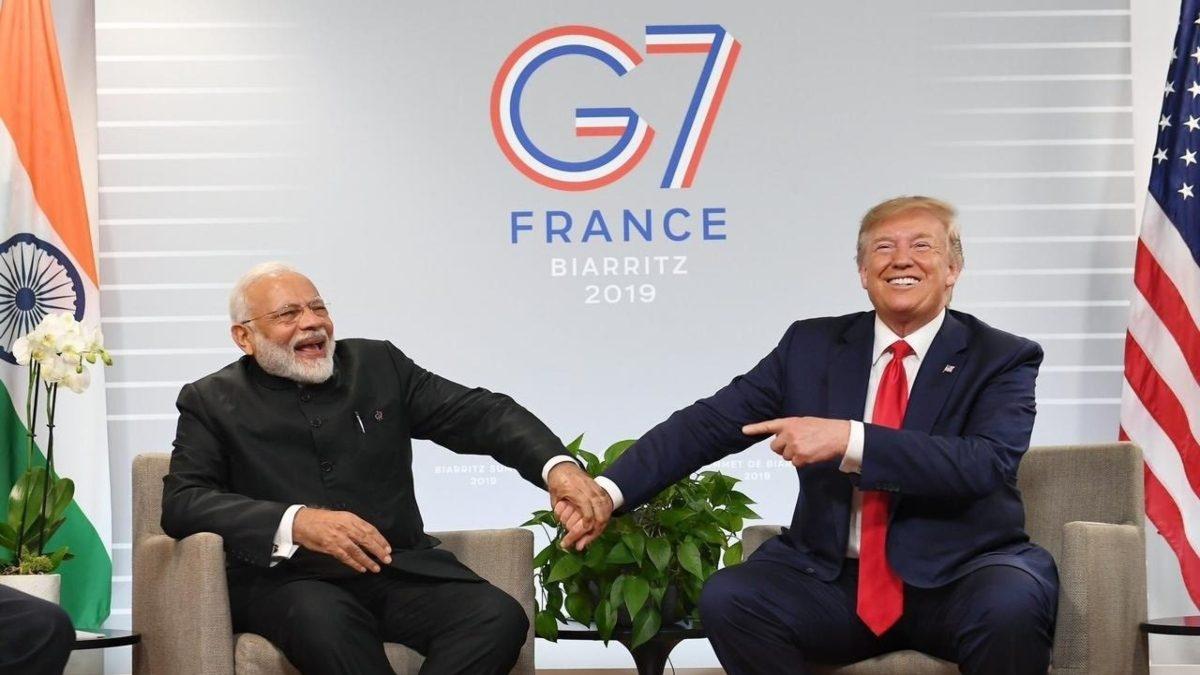
Their strong chemistry is back in action, which will undeniably revitalise the India-US relationship.
Let’s look no further away than Prime Minister Modi’s very timely congratulatory message for Trump.
The Indian PM did not take too long to acknowledge Trump’s victory and shared four nostalgic photos of their time between 2017 and 2020.
These were pictures from the iconic Howdy Modi and Namaste Trump events.
Heartiest congratulations my friend @realDonaldTrump on your historic election victory.
As you build on the successes of your previous term, I look forward to renewing our collaboration to further strengthen the India-US Comprehensive Global and Strategic Partnership.
Together,… pic.
twitter.
com/u5hKPeJ3SY
— Narendra Modi (@narendramodi) November 6, 2024
Looking back at this period, that is Trump 1.
0, one can gauge how Trump 2.
0 is likely to be.
While India would have welcomed both outcomes with optimism, it is clear that the Trump-Modi bonhomie creates much better conditions for strategic cooperation between the US and India.
Trump-Modi bonhomie was off the charts during Trump 1.
0, and the same is expected to play out this time around, albeit with even more camaraderie.
Modi has dealt as prime minister with three different US Presidents – Barack Obama, Donald Trump, and Joe Biden and the upward trajectory of the US-India relationship has sustained throughout this decade.
Unlike Kamala Harris or Joe Biden, Trump is quite politically aligned with the Modi government, which means the two see eye-to-eye on various issues of security, culture and geopolitics.
There would also be fewer hypocritical lectures from the Trump State Department towards India.
Throughout his campaign, Trump bragged about his relationship with Modi, calling him a friend, a fantastic, magnificent man, and even a “total killer”.
That’s the sound of sheer admiration and good faith.
Trump would be more comfortable working with Modi and vice versa without reservations owing to political differences which was an awkward feature of the Modi-Biden equation, and would have passed on to a Kamala Harris presidency in a more pronounced fashion.
Kamala Harris failed to reach out to the Indian-American community despite her Indian origin, which sent a negative signal to India.
In 2019, she had criticised India over the removal of Article 370 in Kashmir.
She also never visited India during her four-year-long stint as the Vice President.
All these hinted towards a Kamala Harris presidency bringing not just possible continuity from the Biden administration’s approach but also a more negative stance towards India.
During Trump 1.
0, India steered incredibly close to the US making one historic move after another by signing crucial defence pacts like COMCASA.
Essentially, this enables information sharing between our militaries.
Another agreement, BECA, provides for geospatial intelligence sharing between the two forces.
Several other agreements during this crucial period cemented India-US defence ties in ways unseen before.
These ties further improved during the Biden era.
Under Trump 2.
0, they will only grow stronger.
While the defence partnership formed the core of the India-US relationship, especially during the Biden era, their strategic goals in the Indo-Pacific took a mild beating due to America’s focus being stretched thin owing to the Ukraine and Gaza wars.
In fact, the world’s geopolitical landscape has changed beyond recognition.
This took the wind out of the sails of the Quad to some extent – a strong departure from the mood set during the first Trump era.
Since 2022, India has been facing pressure over its dealings with Russia, enduring a significant challenge to its strategic autonomy, with visible friction between the two countries, particularly regarding Khalistani terrorism, which has put the entire strategic partnership into question.
Under Trump 2.
0, India-US ties will be re-invigorated.
The Quad will make a substantive comeback with a renewed focus on the Indo-Pacific, reworking the supply chains and countering Chinese aggression and influence.
At the same time, Trump will push for an end to the Ukraine war and is expected to have a relatively soft approach towards Vladimir Putin, which may be a breather for nations trying to maintain ties with Moscow.
Moreover, Trump will be more sensitive towards India’s security concerns, with regard to Khalistan and Kashmir.
He does not have a positive view of Justin Trudeau of Canada, as they are polar opposites politically.
So he will neither lend an ear to Trudeau’s Khalistani leanings, nor is he expected to unnecessarily and publicly push for action on the alleged Gurpatwant Singh Pannun case.
At the end of the day, however, he is supposed to pursue American interests.
It’s just unlikely that he would see any American interest in sabotaging the US’s relationship with India and the trust factor cultivated through the years, for Khalistanis.
Moreover, Trump will not be as intrusive in the Indian subcontinent as the Biden administration, which backed the recent anti-Hasina coup in Bangladesh despite India’s bewilderment.
In fact, he has spoken up against the persecution of Hindus and Christians in Bangladesh and is known to not have a kind view of its current leader Muhammad Yunus who, in Trump’s alleged words, donated to see him lose in 2016.
It’s not all that rosy, however, and there are a few negatives of a Trump presidency which may indirectly harm India.
While it was under Biden that a chaotic and utterly disastrous American withdrawal threw Afghanistan back into the arms of the Taliban, it was Trump who initiated the process of leaving the country.
While one can argue that Trump may or may not have done a better job with the withdrawal, the fact is that it crushed two decades of painstaking diplomatic and material investments made by India in the Afghan civilian government.
This also threw up a major security challenge overnight.
Then there’s Iran, which used to be a major oil supplier to India.
It was under Trump that India’s oil imports from Iran dropped to near-zero owing to secondary sanctions.
While he is generally opposed to wars and interventionism, he is all for using force to keep Iran in check, in line with Israel’s wishes.
This is an area of concern for India, which must shield its investments in Iran, including the Chabahar port, from catching strays in this crossfire.
Trump will try to fix inflation in his country mainly by pushing energy production and exports, especially oil and gas emanating out of American soil.
More American fuel in the markets will lower the cost of energy, and this will come as a boon for India and other Global South economies.
However, with Russia being a top oil supplier to India now, Trump’s administration will attempt to disrupt that trend but their way of doing this would be through competition and not coercion.
While Trump brings an element of unpredictability that can catch anyone by surprise, there are two main sticking points that will impact ties directly— tariffs and immigration.
Trump has stated that India is an “abuser” of the trade system and leans towards imposing tariffs to counter certain protectionist elements of India’s trade policies.
But he holds this view not just for India but for various others in Asia and the European Union.
This, in the Indian view, is fair game, simply business, open to negotiations, and nothing that should be taken to the heart.
Familiar with Trump’s ways, India’s focus would be to dodge any direct tariffs as opposed to generally imposed ones.
Further, Trump is expected to crack down on illegal immigration across the border.
A large number of Indians have formed part of the illegal groups crossing the southern US border with Mexico.
With closing the border being a core promise of his campaign, Trump is expected to act on it with harsh executive orders on day one itself.
This does not directly impact India and is in fact good, because most Indians who are in the US legally do not support illegal immigration.
If anything, it dilutes their position as deserving entrants into the American system, and takes away from their merits and hard work that have allowed them to achieve the American dream.
However, the crackdown won’t end there, as Trump is also expected to lower the number of H1B visas which would have a direct impact on Indian professionals.
While the issues of immigration and tariffs may irritate ties under Trump, given the transactional nature of his leadership, they are highly manageable compared to the Democrats’ relative insensitivity towards India’s security and strategic concerns.
In light of all these considerations, a Trump presidency does not look so bad from the Indian lens.
Views expressed in the above piece are personal and solely those of the author.
They do not necessarily reflect News18’s views.
.